


Compliance & Governance
AI Assurance Explained
Learn what AI assurance is, how evaluation sets provide evidence that AI systems are working as intended, and why they're essential for AI governance, testing, and audit readiness.


AI Assurance
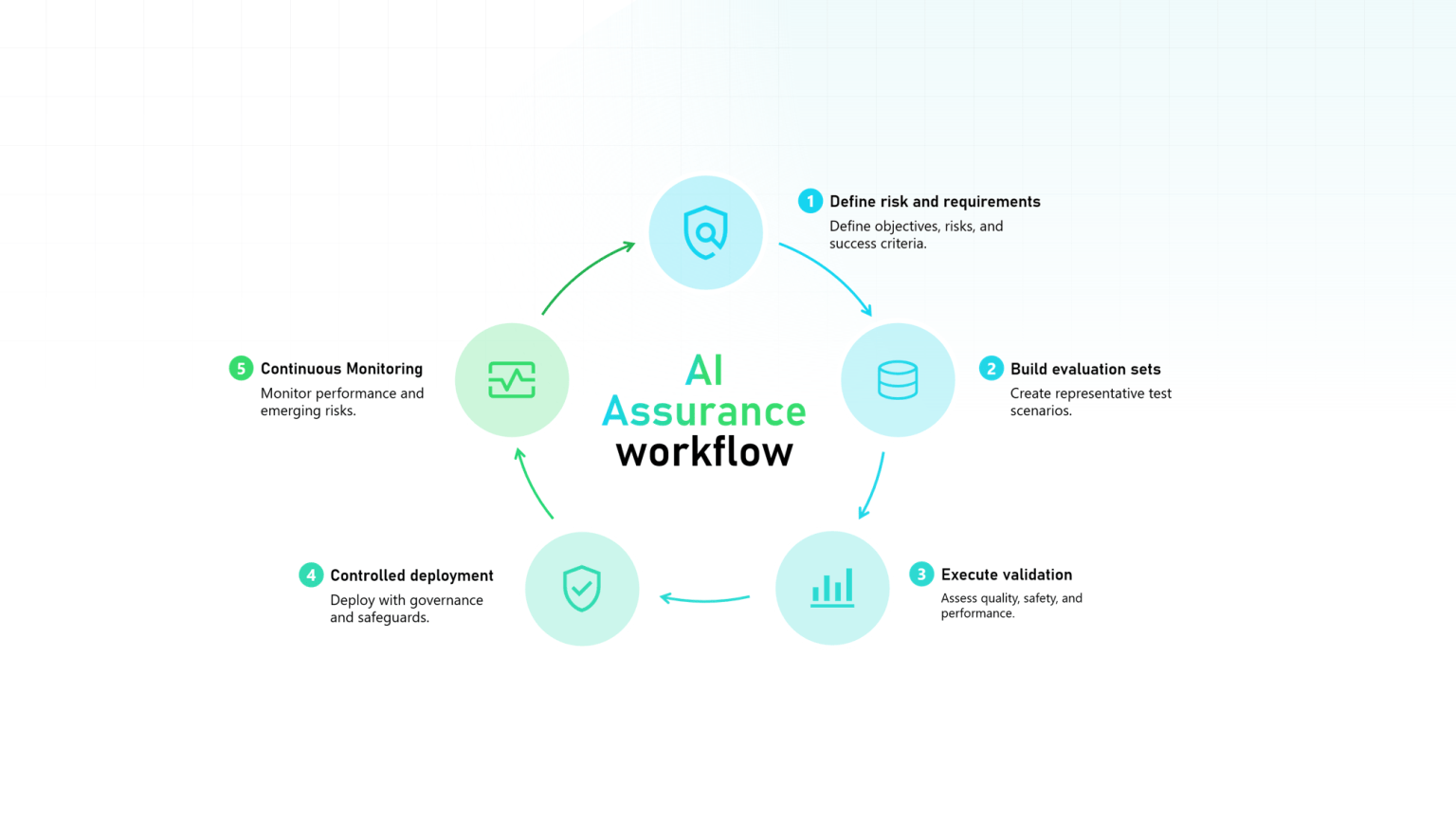
Try each change on past calls from your archive and on test conversations the AI drafts for you, before it goes live. Every version, change note and test run stays on record, ready for your auditors.
Past calls from your archive, plus rare cases the AI drafts for you.
Draft and live versions, a note on each change, and a way back.
Each test run kept with its date, its version and who ran it.
AI rules and guidance agree on one thing: trust in an AI system has to be shown, not assumed. Which of them apply depends on your systems and where you work.
| Framework | What it asks | How Argus Archive helps |
|---|---|---|
| UK AI assurance (DSIT) | Measure, evaluate and show that an AI system can be trusted | Every rule tested on your own calls, with each run kept |
| EU AI Act | Testing, documentation and human oversight, more as the risk rises | Tests before publishing, versions with change notes, people decide what goes live |
| NIST AI RMF | Govern, map, measure and manage AI risk, with documented performance | The AI's answer to each rule and the alerts that would fire, kept for every run |
| ISO/IEC 42001 | A managed, auditable process for how AI is used | Version history, publishing records and publishing by role |
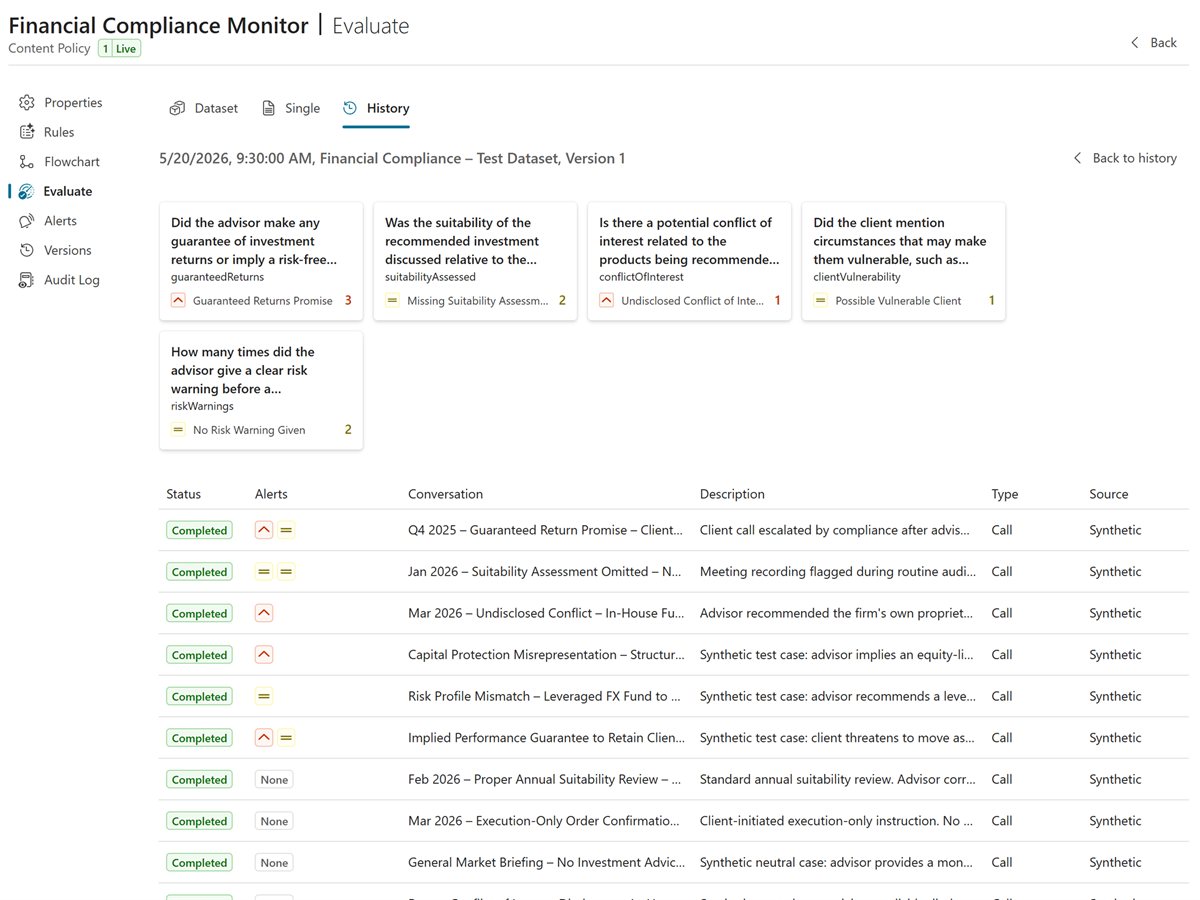
Everything an auditor asks about a rule, in one place.
The conversations each rule was tested on, and where each one came from.
The date, the policy version and who ran it, for every run.
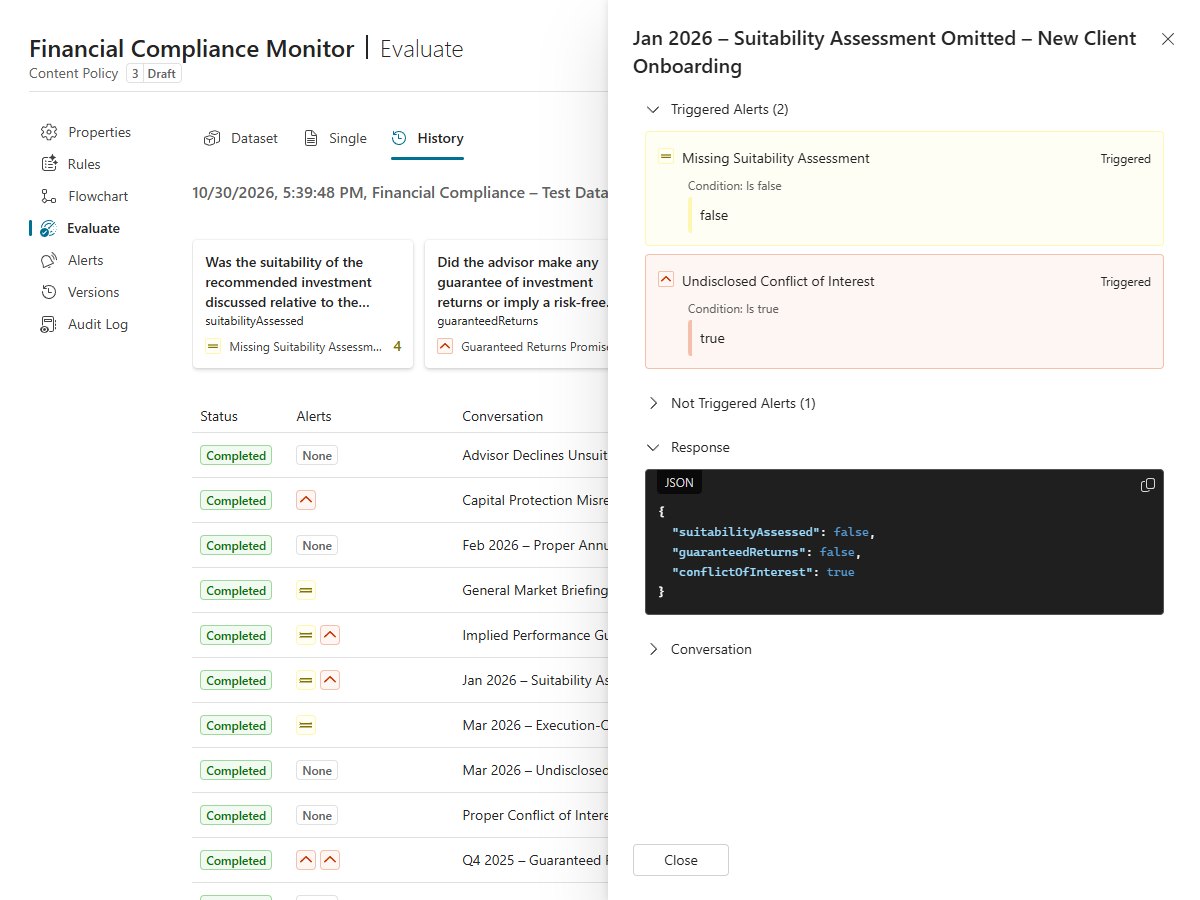
What the AI answered for each rule on each conversation.
Each alert's condition, and whether it was triggered.
What changed in each version, listed for you, with your own note.
Who made each version live, and when.
Run a test set against your draft and check every result. Nothing reaches reviewers, Teams channels or your own systems until you publish.
Run the same test set after every change, and these show up before a customer, an auditor or a regulator finds them.
A change helps one call but changes the answer on another.
Cases you've already found once stay in the test set.
Small changes that add up over many versions.
Near-identical conversations that get different results.
Showing, with evidence, that an AI system works as intended. For AI review that means testing each rule before it goes live and keeping the record of every test and version, so you can answer an auditor without guessing.
A benchmark tests how capable an AI model is in general. A test set is your own: the calls, edge cases, past misses and rules that matter to your business.
After every rule change and before each publish. Run the same test set each time, so you can compare the results with earlier runs.
Yes. Import past calls from your archive into a test set. You can also paste or type a conversation, or describe one and let the AI draft it.
No. A test shows which alerts would fire and why, but raises no alert and sends nothing to Teams or your own systems.
Yes. Turn any earlier version into a new draft, test it and publish it again. Every version that was live stays on record.
Only people whose role allows it. Each publish records who made the version live and when.
AI Workflows is where you write your policies and rules. AI Assurance is how you test each change and keep the record, for rules that run after the call or live.
How AI review is tested, and what regulators expect from AI in compliance.
Compliance & Governance
Learn what AI assurance is, how evaluation sets provide evidence that AI systems are working as intended, and why they're essential for AI governance, testing, and audit readiness.
Industry Insight
Learn how the FCA's Mills Review impacts communications archiving, surveillance, AI governance and regulatory compliance in financial services.
Compliance & Governance
Five takeaways from RegTech Summit London 2026, covering AI adoption, always-on compliance, surveillance, data architecture and the emerging quantum challenge.
Ready when you are
Book a demo with the team who built it. We will show you capture, search and review on Microsoft Teams, and answer your compliance questions.